Why true crime works, and why it needs care
True crime has some of the longest watch times on YouTube. Viewers settle in for twenty minutes and binge a channel's back catalogue. But every case involves real victims and real families, and some involve people who were never convicted. The channels that last treat that seriously, and it shows in their reputation and in their ad revenue.
Step 1: Choose cases carefully
- Start with resolved cases that have a court outcome and solid public records.
- Use legal words precisely. "Arrested", "charged", "convicted" and "acquitted" mean different things. Calling someone guilty who wasn't convicted is how channels get into legal trouble. This isn't legal advice; when in doubt, leave it out.
- Be careful with open cases and living people who were never charged.
Step 2: Research from records
Court documents, official statements and reputable reporting are your sources; forums and other channels are not. List your main sources in the description. Original research is also what separates a real channel from the repetitive content YouTube won't monetize.
Step 3: Script for tension, not shock
- Cold open: one striking, true detail.
- Who they were: introduce the victim as a person before the crime.
- The day: what happened, in order.
- The investigation: the turns, the mistakes, the breakthrough.
- The outcome and aftermath: the verdict, and what changed.
Tension comes from structure and pacing. Graphic description adds nothing, and it limits ads.
Step 4: Visuals that illustrate, never fake
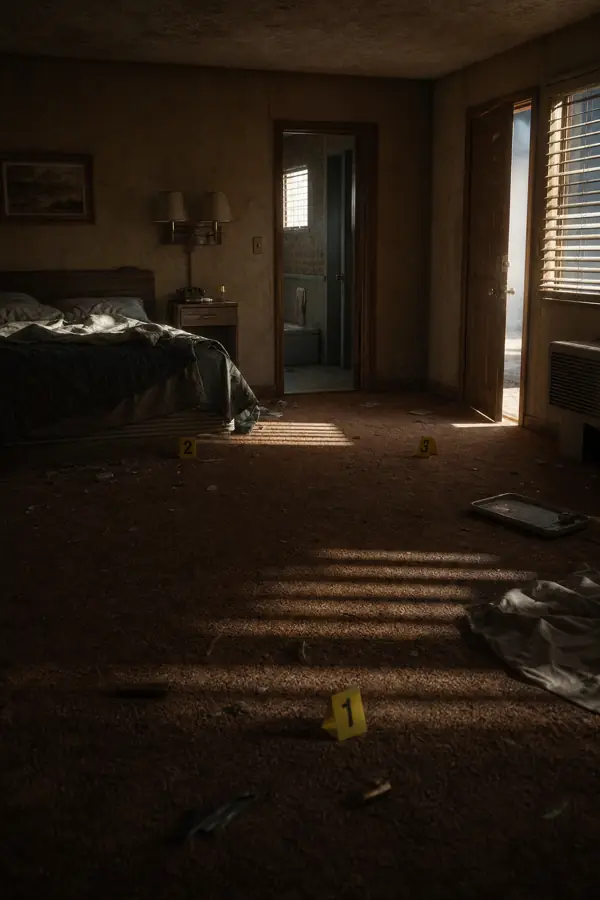
AI scenes should set the mood: a quiet street at night, an empty office, a courtroom, a map. Don't generate realistic images of real victims or suspects, and never make anything that looks like evidence: fake documents, fake crime-scene photos, fake CCTV. A consistent, slightly stylized look keeps it clear the visuals are illustrations. Vidsly's content policy allows a script to say a crime happened but not to depict graphic gore, which keeps thumbnails and videos friendlier to advertisers.
Step 5: Pick a narrator
True crime needs a calm, measured voice that can hold a slow reveal. Guy suits storytelling pacing and is included on every plan; Brian HD (Pro and up) is deeper and more deliberate. Listen to the samples on this page.
Step 6: Format and cadence
Main episodes work best as long-form 16:9 videos (up to 10 minutes and 70 scenes), split into parts for big cases, with Shorts as teasers for each episode. On the unlimited lane every clip costs zero credits within the daily allowance: 20 clips on Creator, 40 on Pro, 60 on Studio. A long episode spreads across days when it needs to, without failing.
Start your first case
Pick a resolved case, build the timeline from records, and open the Studio.